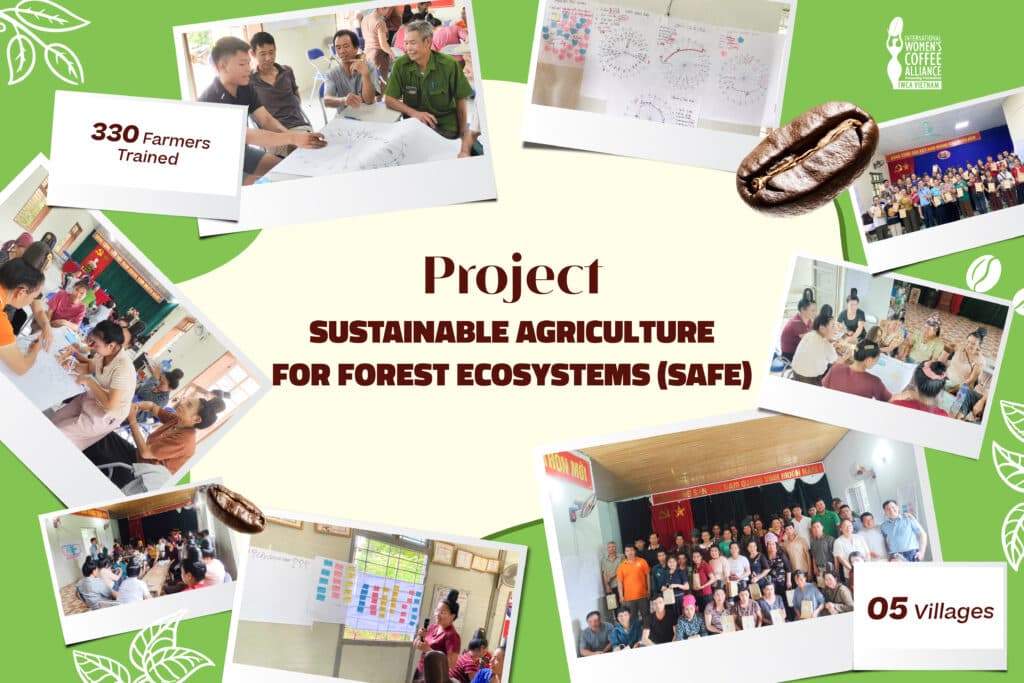
From 7 July to 19 July, IWCA Vietnam, in collaboration with GIZ Vietnam and Detech Coffee, successfully conducted a Training of Farmers (ToF) program for 330 coffee farming households across five villages in Chieng Mai Commune, Son La Province, under the Sustainable Agriculture for Forest Ecosystems – Vietnam Component (SAFE Vietnam) project.
Bringing Knowledge Closer to Farmers
Building on the success of the Training of Trainers (ToT) program, IWCA Vietnam, together with GIZ Vietnam and Detech Coffee, organized a series of Training of Farmers (ToF) sessions for coffee-growing households in Chieng Mai Commune, Son La Province. As a key activity of the Sustainable Agriculture for Forest Ecosystems – Vietnam Component (SAFE Vietnam) project. The program aimed to transfer the knowledge and methodologies acquired by the trained facilitators directly to local farming communities.
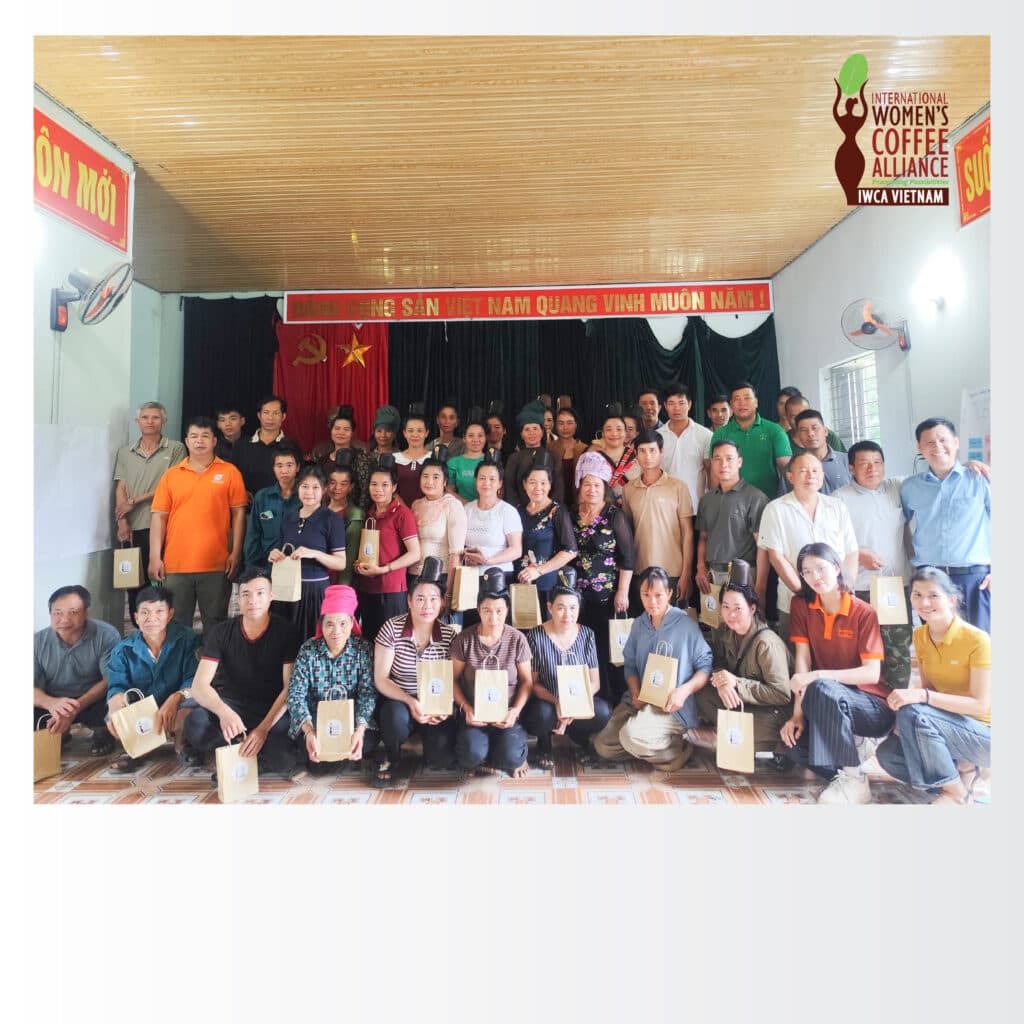
The training took place from July 7th to July 19th, engaging 330 farming households from five key villages in Chieng Mai Commune: Ban Village, Cup Village, Co Sau Village, Puon Vay Village, and Vut Bon Village.
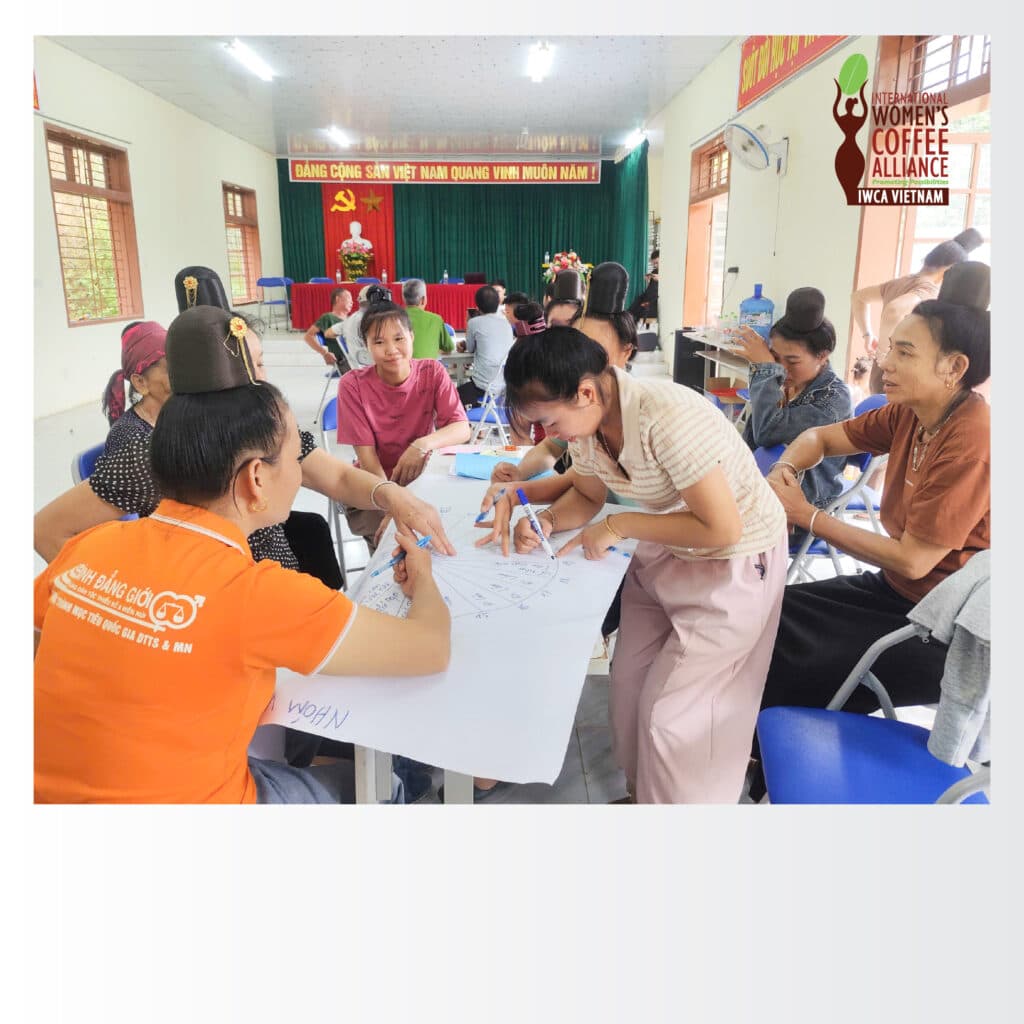
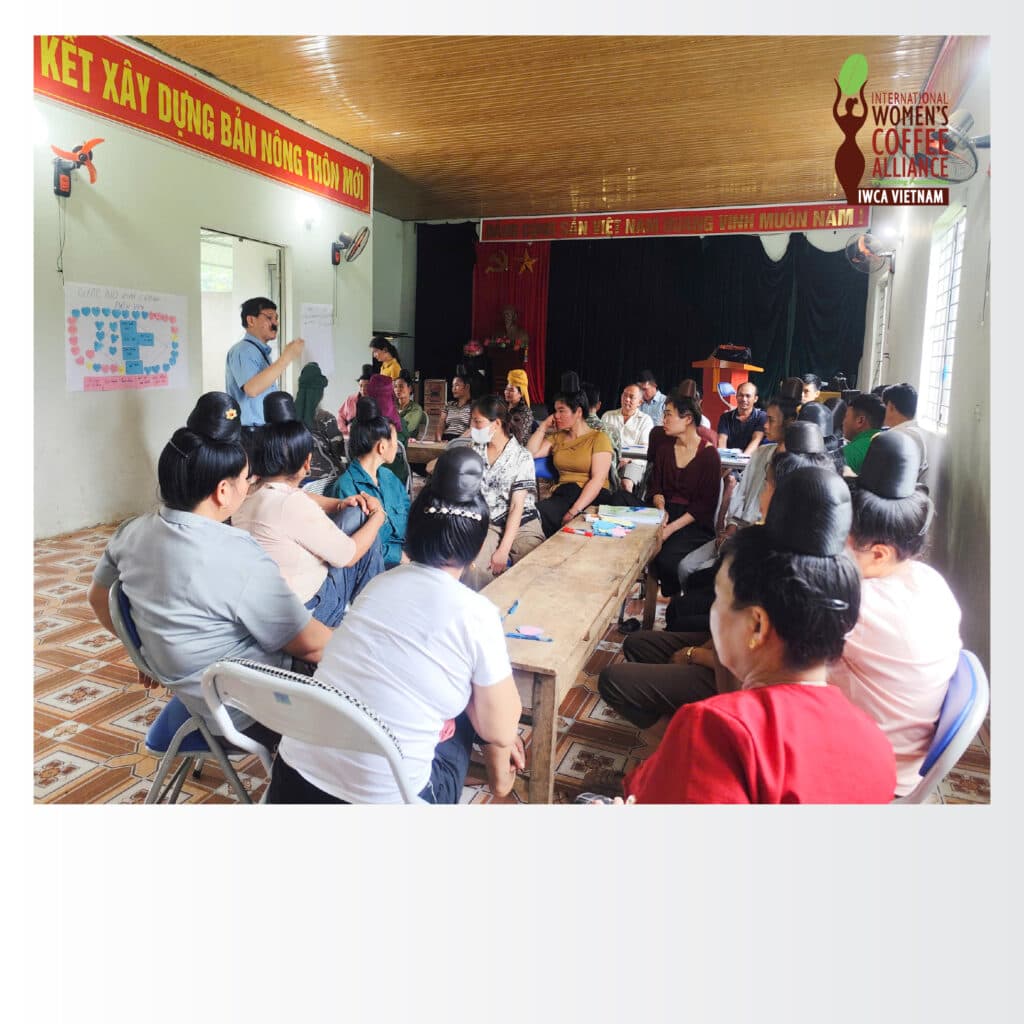
Throughout the training series, participating farmers engaged in discussions on practical topics related to gender equality in agricultural production and household economic development. Through case studies, group discussions, and examples drawn from local contexts, participants gained a deeper understanding of the roles of each family member and shared decision-making in agricultural production.
Alongside gender equality, the program also introduced knowledge and guidance on sustainable agricultural practices that support the protection of forest ecosystems. Participants learned about the importance of efficient resource use, ecosystem conservation, and improving the value of locally produced coffee. These practices play a vital role in building a sustainable coffee value chain capable of meeting the demands of both domestic and international markets.
Building an Inclusive and Sustainable Coffee Community
IWCA Vietnam extends its sincere appreciation to GIZ Vietnam, Detech Coffee, local authorities, and all 330 participating farming households for their active engagement and support throughout the training. The close collaboration among all partners was instrumental to the program’s success and provided strong momentum for SAFE Vietnam to continue implementing community development initiatives in the future.